
Many fastener buyers assume stainless-steel screws and nuts offer complete rust prevention. Is this really the case? Today, I will explain this issue in detail: actually, no. Stainless steel is only “rust-resistant.” It still rusts when exposed to salt spray, strong acids, or improper installation.
The Anti-Rust Principle of Stainless Steel
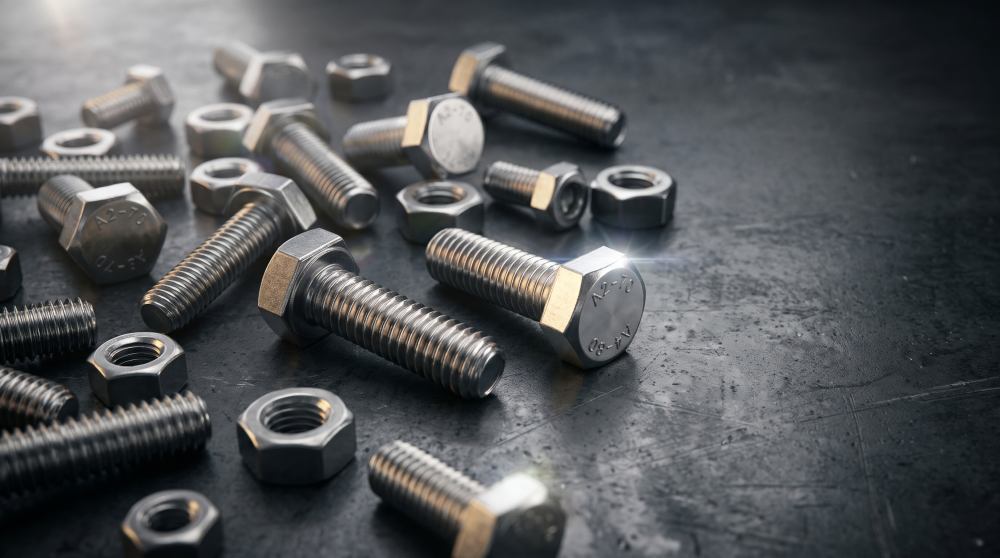
First, we must distinguish between corrosion and rust. Corrosion refers to the deterioration that occurs when metals react chemically or electrochemically with their environment. Rust specifically describes the reddish-brown iron oxide that forms when iron reacts with oxygen and moisture. Stainless steel uses iron as its base, but steelmakers add at least 10.5% chromium to the molten metal during production. This addition completely transforms its corrosion resistance.
When air or water exposes stainless-steel screws to oxygen, the surface chromium reacts rapidly to form an invisible, dense chromium oxide passive layer. This microscopic shield blocks external moisture from reaching the internal iron, preventing red rust from forming.
Why Do Stainless-Steel Screws Rust?
In practical engineering applications, rust on stainless-steel screws usually does not mean the material fails to meet standards. Instead, the following five external factors destroy the surface passive layer:
- Chloride and Salt Spray Attack: Seawater, humid coastal air, swimming pool chlorine, and winter road de-icing salts all contain high levels of chlorides. Chlorides possess extreme penetrating power. They puncture the passive layer locally, triggering pitting corrosion or causing crevice corrosion beneath washers.
- Cross-Contamination from Carbon-Steel Tools: If workers use screwdriver bits, sockets, or wire brushes that previously drove standard carbon-steel fasteners, they leave microscopic carbon-steel shavings on the stainless-steel surface. When moisture hits these iron shavings, they oxidize and form a yellowish-brown “tea staining.” Buyers easily misidentify this as the stainless-steel screw itself rusting.
- Dissimilar Metal Contact (Galvanic Corrosion): When you drive stainless-steel screws directly into aluminum profiles, galvanized steel, or standard carbon steel, and moisture (an electrolyte) is present, the two dissimilar metals create an electrochemical reaction. This accelerates corrosion at the connection point.
- Oxygen-Starved Environments: The chromium oxide passive layer relies on oxygen to repair itself. If you submerge screws in stagnant water, bury them deep in dense, poorly ventilated wet clay, or seal them tightly inside damp joints, the damaged passive layer cannot regenerate. This eventually leads to rust.
- Harsh Industrial Chemicals: Direct contact with strong reducing acids (like hydrochloric or sulfuric acid) or high-concentration bleach instantly strips the chromium oxide protective layer from the screw surface.
Rust Resistance Comparison of Different Stainless-Steel Grades
| Stainless Steel Grade | Common Designation | Key Alloying Elements | Rust / Corrosion Resistance | Typical Applications |
| 304 | A2 / 18-8 | ~18% Chromium, ~8% Nickel | Good (Resists rain, snow, and standard inland humidity) | Inland outdoor construction, indoor/outdoor machinery, general hardware, cabinetry |
| 316 | A4 (Marine Grade) | ~16% Chromium, ~10% Nickel, 2–3% Molybdenum | Superior (Highly resistant to salt spray, chlorides, and mild acids) | Coastal projects, docks and marine vessels, swimming pool areas, chemical and food processing equipment |
| 410 / 430 | Martensitic / Ferritic | ~11.5–17% Chromium, Low or No Nickel | Moderate (Magnetic; offers high hardness and strength, lower rust resistance) | Self-tapping and self-drilling screws for sheet metal, dry indoor assemblies |
How to Prevent Stainless-Steel Screws from Rusting
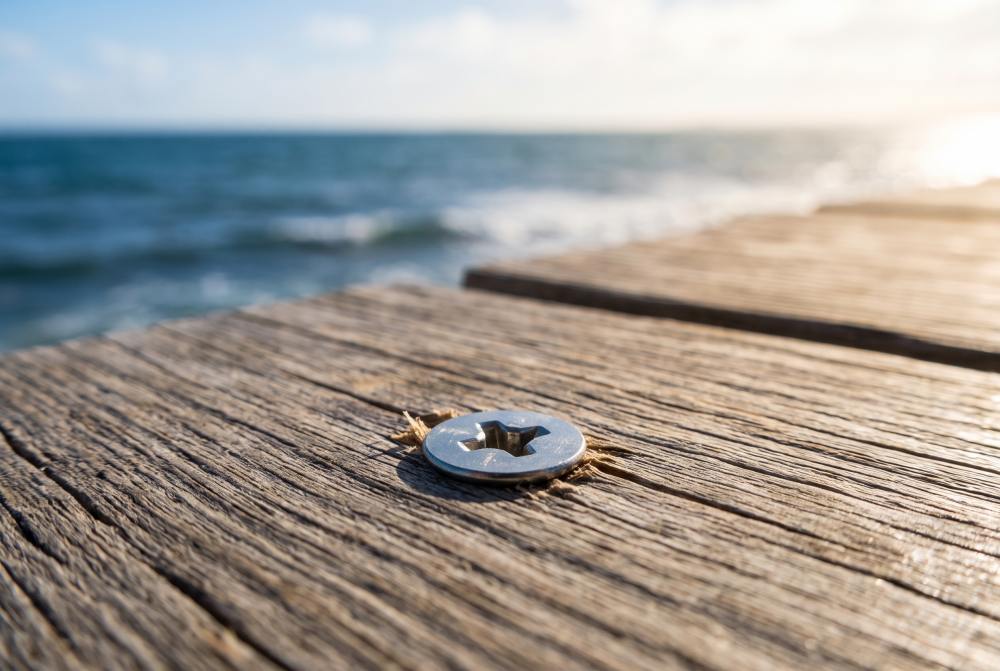
- Choose materials accurately based on coastal distance: For inland outdoor construction and standard facilities, 304 (A2) meets the requirements perfectly. If your project sits within 10 to 20 miles (16–32 km) of a coastline, or near chlorinated pools and chemical plants, you must upgrade to 316 (A4) marine-grade stainless steel.
- Equip dedicated installation tools: Prepare separate stainless-steel or non-ferrous bits and sockets specifically for stainless fasteners. Strictly prohibit mixing tools with carbon-steel fasteners to prevent iron cross-contamination.
- Add insulating washers for dissimilar metal connections: When you install stainless-steel screws into aluminum or carbon-steel bases, place nylon, neoprene, or PTFE insulating washers under the screw heads. This breaks the electrical circuit and prevents galvanic corrosion.
- Apply anti-seize lubricant for high-torque installation: Under high-speed or high-torque tightening, friction easily generates heat that causes stainless-steel threads to cold-weld (thread galling). Forcing the turn tears the passive layer. We recommend applying marine-grade anti-seize lubricant before assembling large-sized fasteners.
- Rinse exposed fasteners with fresh water regularly: For exposed fasteners on coastal boardwalks and dock railings, periodically rinse away accumulated salt and dust with fresh water. This significantly extends their service life.
Conclusion
Stainless-steel screws are not absolutely rust-proof; instead, they rely on the chromium oxide passive layer to achieve long-lasting rust resistance. In actual projects, as long as you select the precise grade for your environment (304 for inland, 316 for coastal and high-chloride areas) and implement installation standards like using dedicated tools and insulating layers, you can effectively avoid rust and maximize fastener lifespan.
Choosing the right grade requires raw materials that meet strict compliance standards. With 23 years of manufacturing experience, T&Y Hardware focuses on producing a full range of 304 and 316 stainless-steel fasteners that comply with DIN, ISO, and ANSI standards. We support custom drawings and provide Material Test Reports (MTRs) with your shipments. If you need a grade evaluation for your project or free testing samples, please contact our engineering team anytime for a quote.
FAQ
Will 304 stainless-steel screws rust outside?
In standard inland weather, 304 screws stay rust-free for decades. However, coastal salt spray, pool chlorine, or road de-icing salts will cause yellowish-brown “tea staining” and minor pitting within two to three years.
Should I choose galvanized or stainless-steel screws for outdoor pressure-treated wood decks?
Choose stainless-steel screws. Modern pressure-treated lumber contains high-copper preservatives (like ACQ) that rapidly corrode standard galvanized screws and leave black rust stains. Using 304 deck screws (316 near the coast) prevents wood staining and matches the timber’s lifespan.
Which stainless-steel screw offers the best rust resistance?
316 (A4) marine-grade stainless steel is the industry benchmark. Its added 2%–3% molybdenum effectively blocks pitting from seawater and chlorides.
My newly installed stainless-steel screws show brown spots. Is this a material defect?
Usually, no. Nearby welding sparks or rusted carbon-steel driver bits typically leave iron residue on the screw surface. Wiping the fasteners with a stainless-steel passivation cleaner removes these spots and restores the finish.
How can I identify real vs. fake stainless-steel screws (preventing 201 from passing as 304)?
Verify authenticity using three methods:
- Testing Fluid: Authentic 304 stays clear or light yellow, whereas high-manganese 201 turns red immediately.
- Head Stamps & Magnets: Check for grade markings (like A2-70 or A4-80). Do not rely on magnets alone, as cold-headed 304 carries slight magnetism—though strong magnetic pull indicates plated carbon steel or 410.
- Verification Reports: Request Material Test Reports (MTRs) or run a portable spectrometer check on bulk orders.



 English
 Spanish
 Arabic
 Russian
 Portuguese