
A shoulder bolt (also known as a shoulder screw) is commonly referred to in the tooling industry as a stripper bolt. It features an unthreaded, precision-ground cylindrical shoulder between the head and the threaded portion. This stepped design allows it to function both as a mounting fastener and as an axle or pivot pin in mechanical assemblies. Below is a detailed breakdown of its structure, working principle, and selection criteria.
Definition & Basic Concept
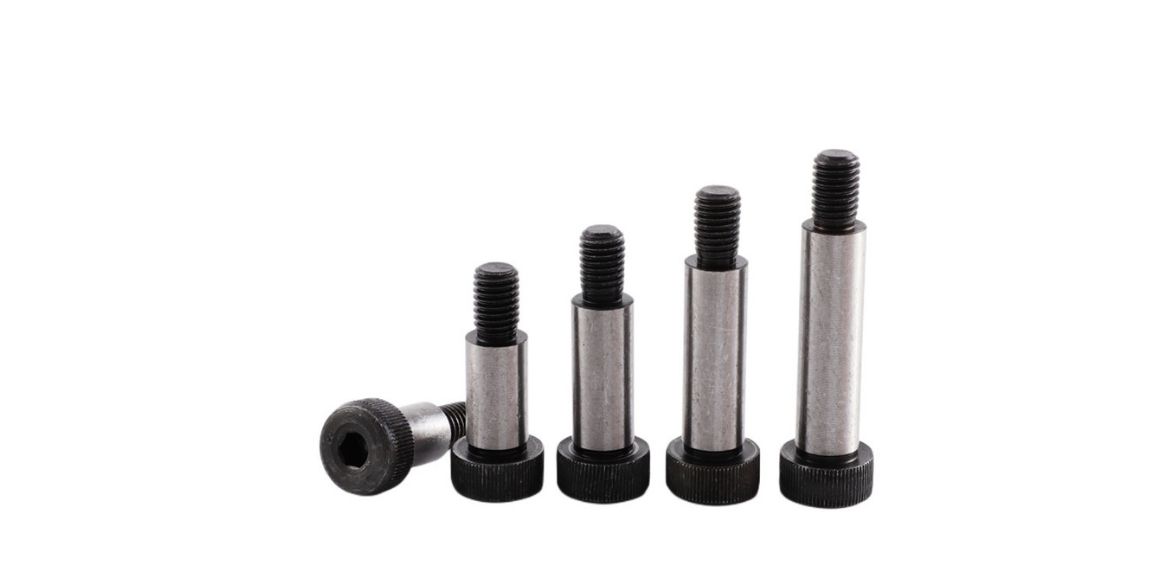
A standard shoulder bolt consists of three primary sections:
- Head: Most commonly configured as a cylindrical socket head (Hex Socket), which is driven using a hex key or Allen wrench and can sit flush within a counterbore. Variants such as hex heads, button heads, and slotted heads are also available for different clearance requirements.
- Shoulder: The critical functional section of the fastener. This smooth, unthreaded cylindrical shank is centerless ground to tight tolerances (typically ISO 7379 or custom tolerances). With its high hardness and low surface roughness, it serves directly as a low-friction pivot, bearing surface, or precision dowel pin.
- Threaded Shank: Located at the end of the shoulder, this section has a smaller nominal diameter than the shoulder itself and is generally short. The thread only functions to anchor the bolt into the substrate, leaving lateral load support and alignment to the shoulder.
Anatomy & Working Principle
When tightened, the 90° perpendicular shoulder stop seats firmly against the face of the substrate, creating a rigid mechanical stop. All clamping pre-load is absorbed by the base material, ensuring that components mounted on the shoulder are not crushed or locked in place. Thanks to the smooth finish and controlled length of the shoulder, mounted parts like pulleys, links, or stripper plates can freely rotate, pivot, or slide linearly along the shank.
In short: Shoulder Bolt = Fastener + Precision Alignment Pin + Pivot Axle, providing three distinct functions in a single part.
Specification Guide & Sizing Rules
A frequent mistake in specifying shoulder bolts is confusing the nominal size: the nominal size refers to the shoulder diameter, not the thread diameter.
For example, in the standard imperial callout 1/2″ × 1-1/2″ (3/8″-16):
- 1/2″: Shoulder diameter (outer diameter of the ground shank)
- 1-1/2″: Shoulder length (the functional working length/clearance)
- 3/8″-16: Thread specification
Imperial shoulder bolts are primarily governed by ASME B18.3, while metric versions follow ISO 7379. Their tolerances and head dimensions are not interchangeable, so the applicable standard must be confirmed during design and procurement.
Shoulder Bolt vs. Regular Bolt
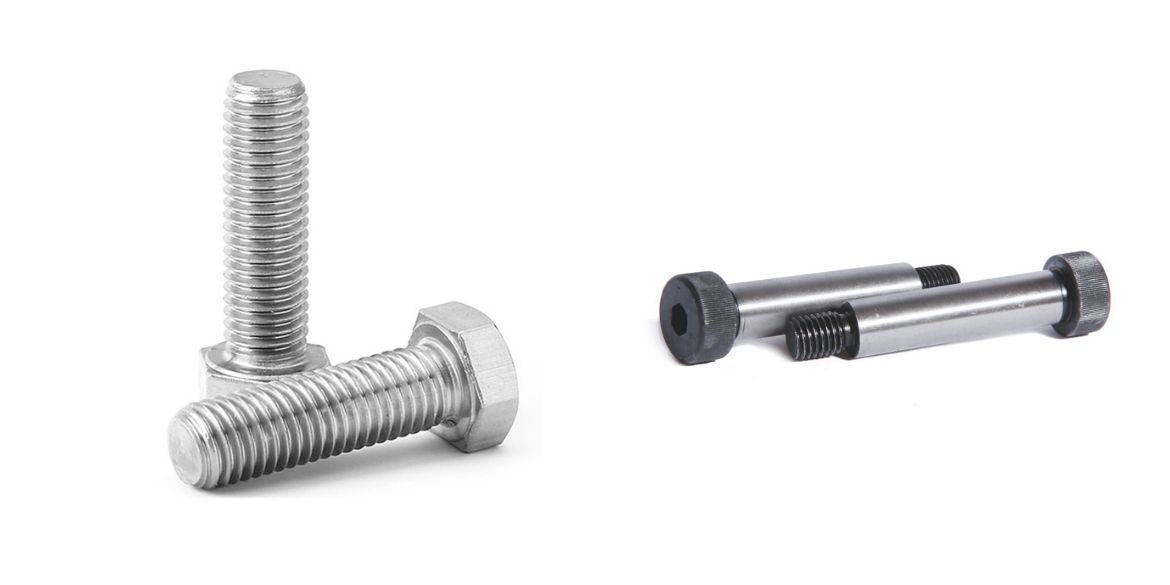
| Comparison Parameter | مسمار الكتف | Standard Hex Bolt |
| Shank Structure | Precision-ground unthreaded shoulder + short undersized thread | Fully threaded or rough-machined partial unthreaded shank |
| Diameter Tolerance | Precision fit (Metric ISO or custom ) | Standard commercial tolerance |
| Primary Function | Bearing support, pivot rotation, linear guiding, anti-crush standoff | Solely generating clamping force to hold parts rigid |
| Shear Resistance | Solid, unthreaded shank handles high shear and shock loads directly | Threads create stress concentrations and are prone to shear failure |
| Typical Applications | Stamping dies, pivot hinges, linkage assemblies, idle pulleys | General structural frame and panel fastening |
Note: Distinguish shoulder bolts from step bolts. While structurally similar in outline, step bolts lack precision-ground steps and have loose manufacturing tolerances. They cannot be used as rotation pins or precision alignment surfaces.
Common Engineering Uses
- Stamping and Injection Tooling: Used to suspend stripper plates and guide springs, precisely controlling the stroke—hence the name “stripper bolt”.
- Mechanical Drives & Pivots: Functions as a compact axle for pulleys, sprockets, idler gears, and rollers without requiring dedicated shafts and retaining rings.
- Automation & Linkages: Serves as the pivot point in actuator arms, robotic linkages, and sliding guide assemblies.
- Anti-Crush Mounting: Mounts brittle plastics, sheet metals, and PCB boards with a controlled standoff clearance, preventing parts from cracking under torque.
- Linear & Motion Systems: Acts as an alignment pin or idler mount in 3D printers, actuators, and belt tensioners.
Selection Guidelines
- مادة: Choose high-strength alloy steel (e.g., 40Cr, SCM435 quenched and tempered to Grade 10.9 or 12.9) for standard mechanical loads. Use 304 or 316 stainless steel for corrosive or washdown settings.
- Shoulder Diameter & Bore Fit: Pair the shoulder with appropriate mating hole tolerances (typically an or clearance fit for rotary applications) to avoid binding or excessive play.
- Shoulder Length: Ensure the shoulder length slightly exceeds the mounted part’s thickness (typically by 0.1 to 0.3 mm) to maintain free movement.
- Thread Engagement: Ensure the tapped hole allows an engagement depth of at least 1.0 to 1.5 times the nominal thread diameter.
(Tip: If the shoulder serves as a continuous high-speed rotary axle, pair it with a bronze sleeve bushing or needle bearing to minimize shank wear.)
Installation & Maintenance Tips
- Verify Tapped Hole Depth: Blind tapped holes must provide sufficient tap drill depth and thread relief to ensure the shoulder face seats completely flat against the base.
- Control Tightening Torque: Shoulder bolts locate on the shoulder face; excessive torque does not improve alignment and risks stripping the smaller thread or snapping the head.
- Protect the Ground Surface: Never grip the ground shoulder with pliers or wrenches during assembly, as surface burrs will damage the clearance fit.
- Hole Chamfering & Thread Locking: Add a small chamfer to the mating part bore to ease assembly and clear any transition radius. In oscillating or vibrating environments, apply a medium-strength threadlocker to prevent back-out.
ملخص
A shoulder bolt integrates the mechanical function of an alignment pin with the retaining power of a threaded fastener. Remember three rules when specifying: the nominal size is the shoulder diameter, the shoulder is the precision working surface, and the threads only secure the bolt to the base.
Looking for Precision Shoulder Bolts?
T&Y Hardware manufactures industrial-grade shoulder bolts in accordance with ASME B18.3 and ISO 7379 standards. We supply parts in high-strength alloy steel, 304/316 stainless steel, brass, and custom alloys, maintaining tight tolerances and fine surface finishes for stamping dies, mechanical drives, and automated equipment. Contact our technical sales team for volume quotes or custom drawing inquiries.



 Arabic
 English
 Spanish
 Russian
 Portuguese