
As a versatile and critical fastener, the مسمار العين not only serves basic fixing functions but also features a head loop design that enables direct suspension, towing, or lifting operations. It plays a pivotal role in the construction of large-scale building structures and the assembly of heavy machinery. This article will systematically analyze the types and characteristics of eyebolts to provide references for engineering selection.
Types of eye bolts
According to shape
- Triangular Eye Bolt

The head features a triangular eye-hole structure, which significantly enhances structural stiffness and deformation resistance compared to circular eye-holes, particularly excelling under lateral loads.
- Flat Eye Bolt

The plain eye bolt features a flat head structure with a central through-hole; its flat design ensures close contact with the mounting surface, effectively reducing protrusion height for convenient connection with shackles or hooks.
- Open Eye Bolt

The open-eye bolt, also known as a hook bolt, features an open-eye hole structure at the head. This design enables quick attachment and detachment without disassembling the connected parts, significantly enhancing operational convenience, particularly in applications that require frequent loading and unloading.
- Closed Eye Bolt

As the preferred choice for vertical lifting and critical hoisting operations, its closed-eye structure can withstand higher safe working loads, ensuring operational stability and safety.
- Pigtail Eye Bolt
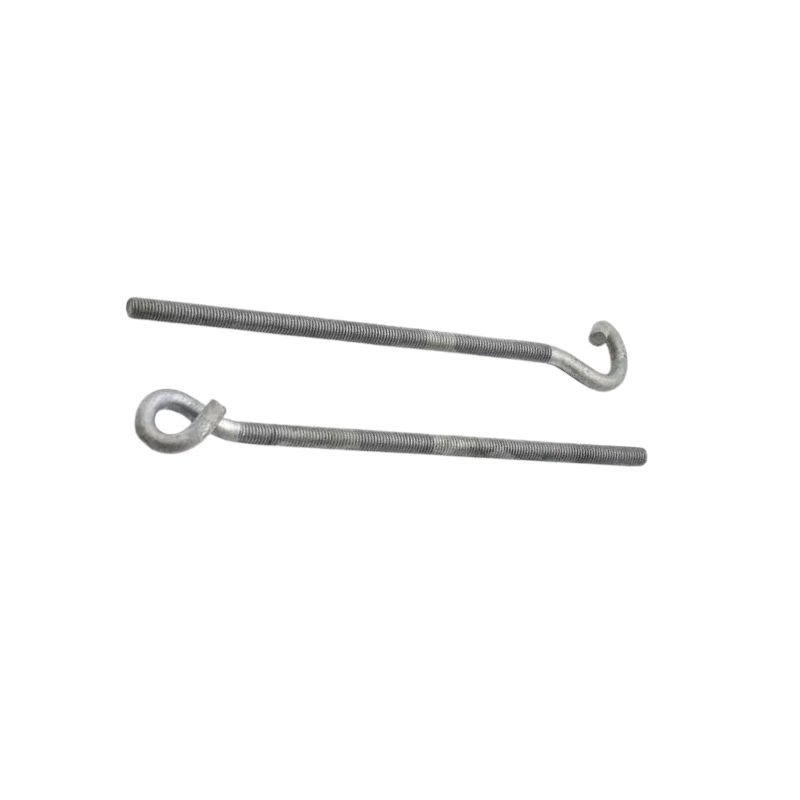
The head features a curved design resembling a pig’s tail, specifically engineered to effectively prevent ropes, cables, or soft slings from slipping or shifting out of the loop under load.
According to characteristics

The integrated head-lifting eye structure involves inserting the anchor body into a pre-drilled hole during installation, then tightening the nut to expand the sleeve, creating a strong grip within the substrate. The lifting eye portion is used to connect slings, enabling lifting operations.
- Eye Lag Bolt
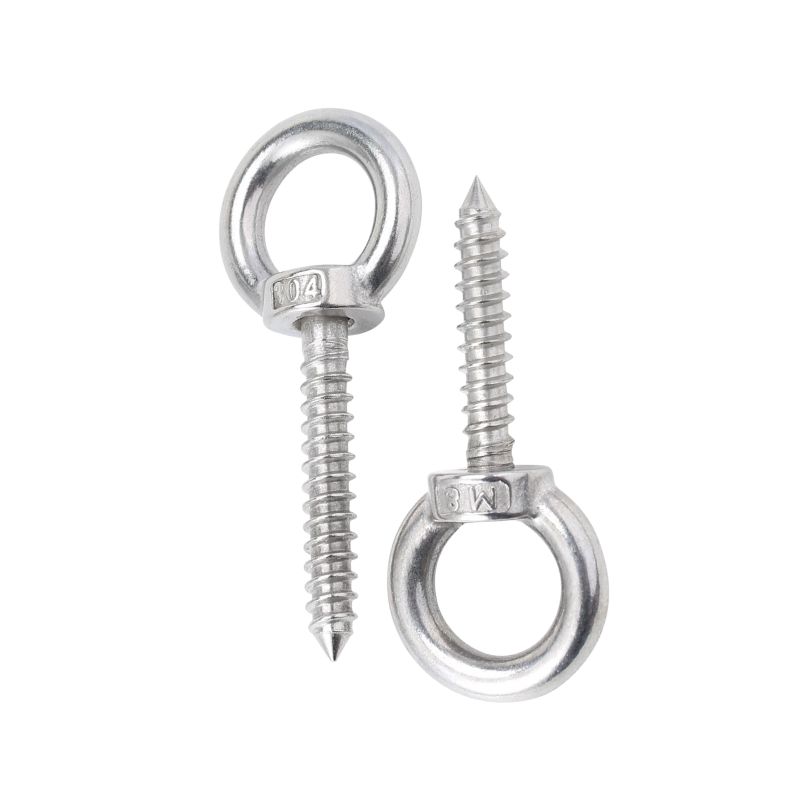
The shaft features sharp threaded tips with wide-pitch threads, allowing direct screwing into softer materials like wood and plastic without pre-tapping. As a common component for hanging points in wooden structures, it offers the advantage of quick and easy installation.
- Welded Eye Bolt

The head-lifting eye is formed using a post-welding process, which can be employed to manufacture eye bolts of extra-large specifications, non-standard sizes, or specific shapes.
- Shoulder Eye Bolt

Below the lifting eye is a cylindrical, thickened shoulder structure. When the bolt is tightened, the shoulder will closely fit the mounting surface, distributing most of the bending and shear loads generated during lifting over a larger contact area, significantly reducing stress concentration at the thread root.
Additionally, eye bolts are primarily made of materials such as stainless steel, carbon steel, brass, titanium, and aluminum alloys. According to the German DIN standard, they mainly include two types: DIN 444 and DIN 580.
ملخص
The above provides a comprehensive introduction to various types of eye bolts. Whether it’s small self-tapping screws or large machine eye bolts, any fastener with a ring-shaped head design falls under the category of eye bolts.
If you need to procure suitable eye bolts, as a professional fastener manufacturer, we can offer a wide range of models along with expert technical guidance to assist you in making precise selections.



 Arabic
 English
 Spanish
 Russian
 Portuguese