
You’re running a 316 stainless steel nut onto a matching bolt with an impact gun. Two turns before it seats, the nut locks dead. You hit reverse to back it off, and the brand-new болт shears right in half—no rust, no cross-threading, just fused scrap metal. That is thread galling, commonly known as cold welding. Fortunately, once you understand what triggers it, you can prevent it completely. This guide breaks down the mechanics behind galling and five shop-floor fixes that actually stop it.
What Actually Happens Inside the Threads?
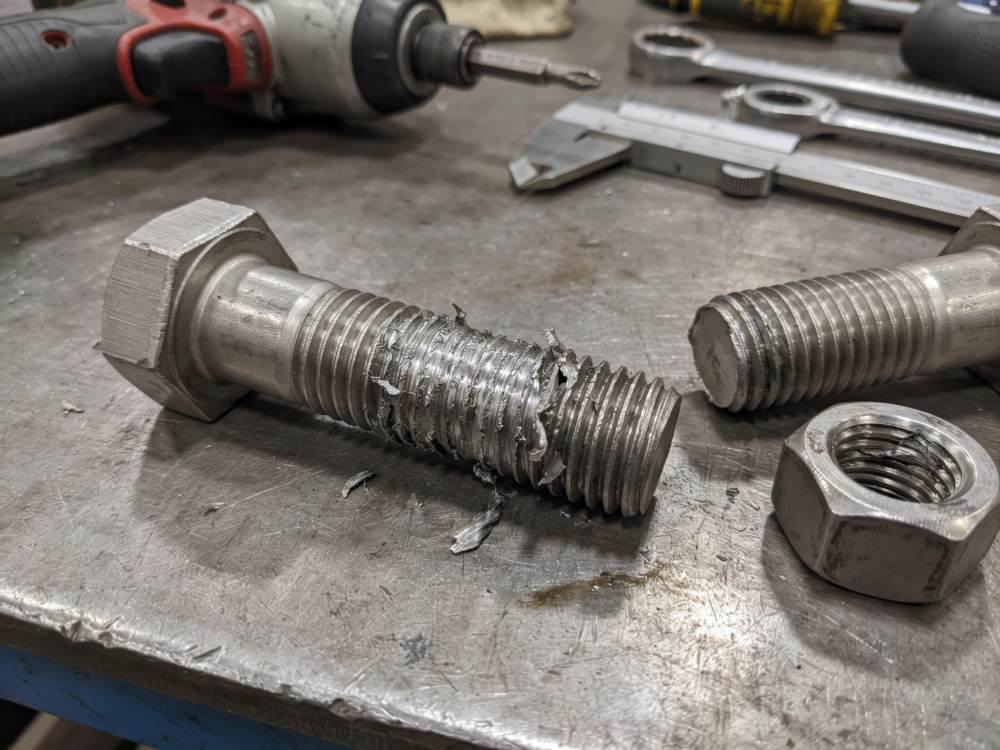
Stainless steel resists rust because an invisible, chromium-rich oxide film covers its surface. That film stands up well against saltwater and chemicals, yet mechanically, it is paper-thin.
When you tighten a stainless nut onto a stainless bolt, intense clamp load forces the mating threads to rub together. Friction spikes the local temperature and scrapes that protective film right off, exposing raw, reactive metal underneath. Under high pressure, the contact points on the bolt and nut threads literally weld together at a microscopic level. The harder you crank, the more those tiny welds tear, packing metal debris into the thread roots until the fastener locks solid.
Austenitic grades—especially 304 (A2) и 316 (A4)—suffer from this most because they are relatively soft and work-harden rapidly under friction.
Galling vs. Seizing: What’s the Difference?
People often use these terms interchangeably, but telling them apart helps you pinpoint what went wrong on the shop floor:
- Galling: Happens while you tighten (or occasionally loosen) a new fastener. Pure friction and heat drive this metal-to-metal adhesion.
- Seizing: Describes the final result—a fastener that refuses to move. Galling causes seizing, but galvanic corrosion, grit in the threads, or years of high-heat oxidation can also lock a joint up.
If a brand-new bolt locks up on your assembly line before it even reaches full torque, you have a classic galling problem.
Five Shop-Floor Fixes That Actually Work
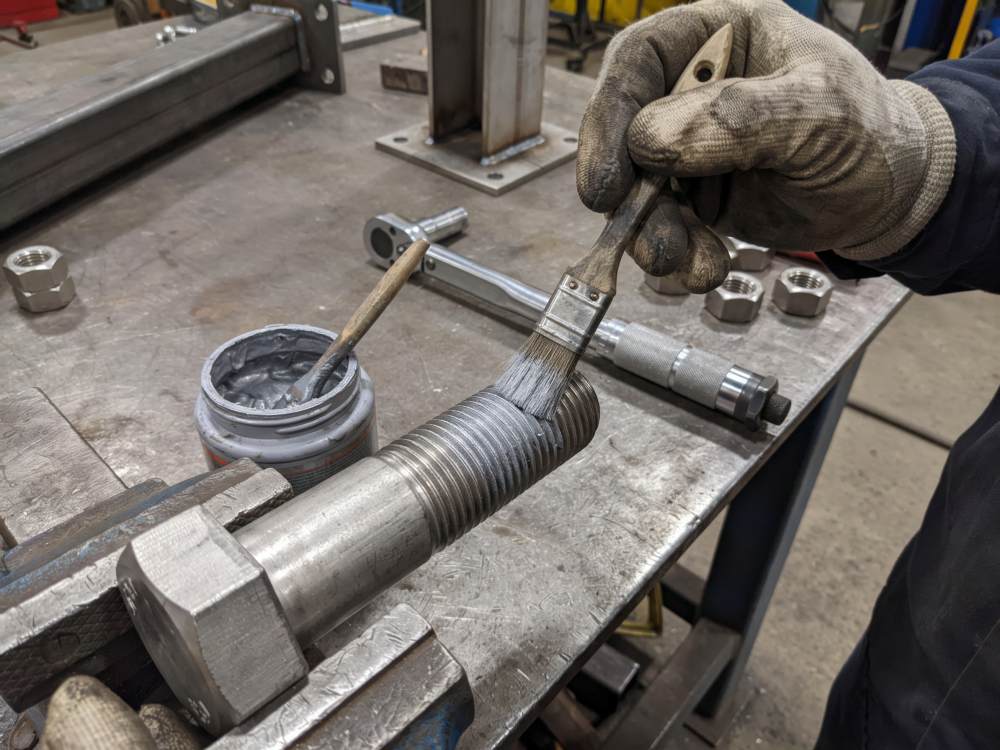
You cannot change the metallurgy of standard 304 or 316 stainless steel, so preventing galling comes down to three fundamentals: controlling friction, reducing heat, and keeping bare metal surfaces apart.
- Put Down the Impact Gun (Lower Your RPMs). High-speed pneumatic and electric impact wrenches act like galling machines. High RPMs generate friction heat faster than stainless steel can shed it. Switch to a manual torque wrench or dial your electric driver down to a slow, steady speed to cut failure rates dramatically. Also, watch out for nylon-insert lock nuts (Nylock) during high-speed assembly—constant drag from the nylon ring drives thread temperatures way up before the nut even seats.
- Never Assemble Stainless Dry. Whenever possible, keep bare stainless from grinding directly against bare stainless. Adding a barrier between the threads stops friction from stripping the oxide film:
- Field maintenance and small runs: Brush on an anti-seize compound containing molybdenum disulfide (moly), nickel, or PTFE. (Tip: For food processing or potable water equipment, skip heavy-metal pastes and use an NSF-rated food-grade lubricant.)
- High-volume automated lines: Brushing on wet paste slows down operators and attracts shop dust. At our facility, we regularly supply assembly lines with pre-coated dry-film fasteners—baking PTFE (Teflon), Xylan, or molybdenum disulfide directly onto the threads. Operators pull them straight out of the box for clean, dry, dust-free installation.
- Mix Your Stainless Steel Grades: Identical alloys with matching surface hardness weld together easily. Where corrosion requirements allow, pair a 316 stainless bolt with a 304 stainless nut (since 304 offers slightly lower corrosion resistance than 316, verify the environment first). The hardness difference between the two grades helps interrupt cold welding.
- Specify Rolled Threads Over Cut Threads. How a manufacturer makes a bolt affects galling far more than most buyers realize. Lathe-cut threads leave behind microscopic tears and burrs that grind like sandpaper under load. Rolled threads, which cold-forming dies press into shape, compress the metal’s grain structure and create a mirror-smooth surface with much lower friction. When sourcing standard fasteners, confirm that your supplier uses thread rolling rather than single-point cutting.
- Choose Coarse Threads (UNC) When Design Permits Fine threads (UNF) pack tighter pitches and narrower clearances, leaving almost no room for thermal expansion or minor debris. Unless your equipment demands fine pitch for extreme vibration resistance, go with coarse threads—they offer wider clearances and dissipate heat faster during tightening.
Quick Selection Guide for Engineers & Buyers
| Operating Condition & Application | Recommended Fastener Setup | Why It Works |
| General outdoor / light manual assembly | 316 Bolt + 304 Nut + Controlled manual tightening | Dissimilar hardness + low RPMs prevent heat spikes |
| High-speed factory assembly lines | Pre-coated PTFE / Moly dry-film fasteners | Ready out of the box; clean, dry install speeds up cycle times |
| High-heat environments (above 400°C, e.g., exhausts) | Nickel-based anti-seize or upgrade to A286 superalloy | Standard lubricants burn off; nickel and superalloys withstand extreme heat |
| Heavy structural / M20+ large-diameter bolts | Duplex 2205 Stainless or Grade 5 Titanium fasteners | Higher surface hardness directly resists adhesive wear |
When Is Standard Stainless Steel Not Enough?
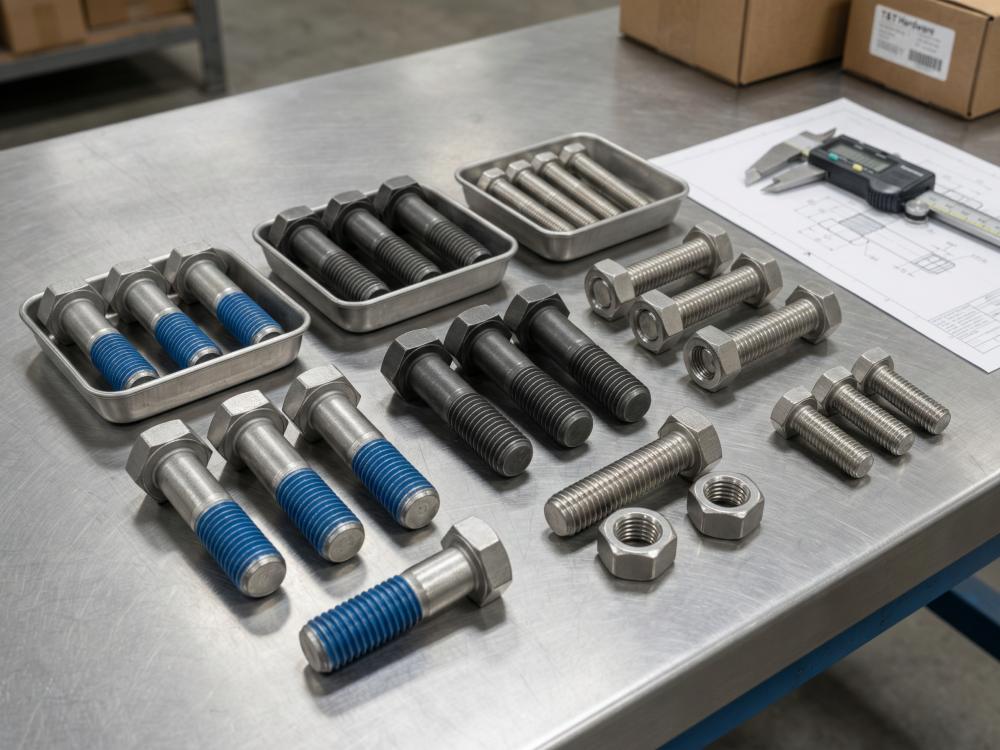
If you fasten large-diameter studs (M20 and above), work with high-heat exhaust systems, or run fully automated lines where a single snapped bolt halts production, standard 304 or 316 hardware may simply not fit the job.
In demanding applications like these, upgrading to Duplex Stainless Steel (2205), A286 superalloy, или Grade 5 Titanium actually saves money over time. Their high surface hardness resists adhesive wear and eliminates costly line downtime.
Struggling with seizing stainless bolts on your current project?
В Оборудование T&Y, we manufacture standard and custom fasteners in 304, 316, Duplex, Titanium, and specialty alloys—complete with in-house precision thread rolling and dry-film lubricating coatings like PTFE and Dacromet. Send your drawings or operating specs to our engineering team, and we will help you select a thread and coating combination that never locks up on your line.




 Russian
 English
 Spanish
 Arabic
 Portuguese