
In piping engineering and mechanical installations, procurement specialists and junior engineers often confuse Parafusos em U vs parafusos prisioneiros. Although they share a similar baseline configuration—both are headless fasteners threaded at both ends—they serve completely different engineering functions in real-world applications. This guide breaks down their core features and structural differences to help you select the right fastener for your project.
Key Features of a U Bolt
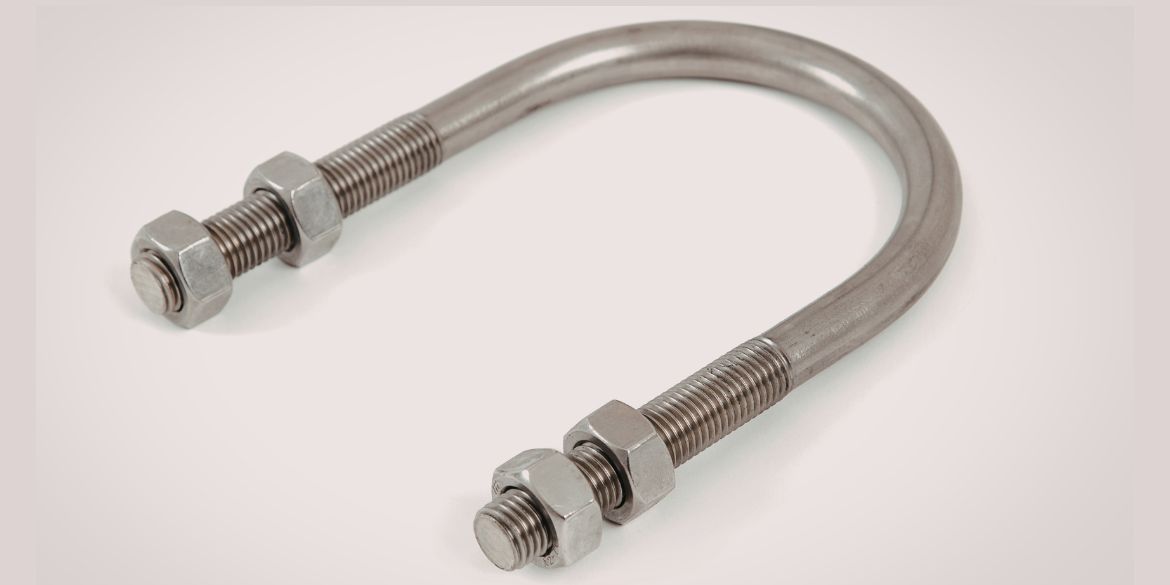
UM U-bolt is named after its distinct “U”-shaped bend. The inner contour is typically manufactured in round, square, or semi-square profiles to fit different pipe geometries and structural beams. It features no forged head, with machine threads on both leg ends. During assembly, the curved body encloses the pipe surface while both threaded ends pass through mounting holes in a structural bracket, clamped securely with nuts.
Key Features of a Stud Bolt
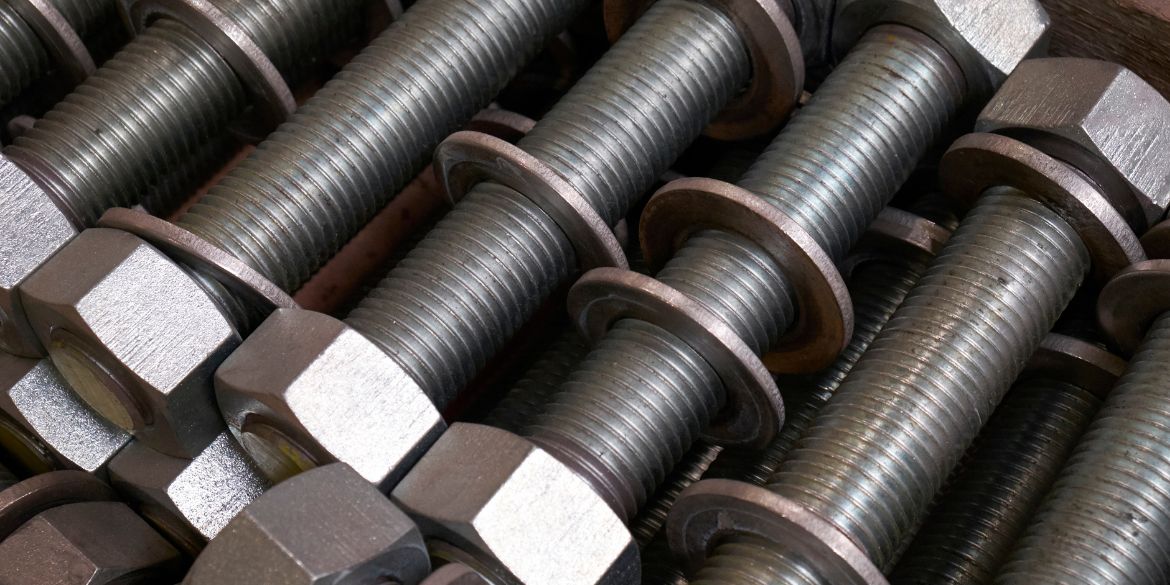
UM parafuso prisioneiro is a straight, headless cylindrical rod available in two main configurations: continuous all-thread or double-ended with a smooth center shank. During installation, it passes directly through aligned holes in two mating components (such as pipe flanges, valves, or machine frames), using nuts torqued symmetrically on both ends to clamp the joint securely together.
Quick Parameter Comparison Table
| Comparison Dimension | U-Bolt | Stud Bolt |
| Geometric Shape | U-shaped bent rod (Round / Square / Semi-square) | Straight headless cylindrical rod |
| Primary Load Mechanism | Radial clamping force / Transverse shear resistance | High axial tension (Pure longitudinal clamping) |
| Core Function | Pipe suspension, structural anchoring & guiding | Flange joint sealing & pressure containment |
| Mating Components | Pipes, saddle clamps, structural steel channels | Pipe flanges, valve bodies, high-pressure gaskets |
| Governing Standards | DIN 3570, ASME B18.31.5 | ASME B18.31.2, ASTM A193 / A320 |
Key Technical Differences
- Load Vector and Force Distribution
U-Bolt: Distributes load radially. The curved inner profile wraps around the pipe circumference, primarily resisting pipe weight, fluid pulsations, and lateral vibrations.
Stud Bolt: Delivers pure axial tension. Tensile load is concentrated along the central axis of the bolt, generating high clamping force across mating flange faces.
- Preload and Assembly Precision
U-Bolt: Installed using standard manual wrenches. The focus is on positioning and clamping, with controlled torque to avoid crushing thin-walled pipes.
Stud Bolt: High-precision fastening. Requires calibrated torque wrenches or hydraulic tensioners applied in a multi-stage star/cross pattern to guarantee uniform gasket compression and prevent leaks.
- Thermal Displacement and Expansion Tolerance
U-Bolt: Can serve as a sliding guide support when installed with designated clearance, allowing the pipeline to expand and contract axially under temperature swings.
Stud Bolt: Directly exposed to thermal cycles along with the flange. Its material thermal expansion coefficient must match the mating flange to prevent high-temperature joint relaxation and leakage.
- Maintenance and Removal Under Seizure
U-Bolt: If threads corrode or seize, the exposed ends can be easily cut off beneath the support beam where clearance is ample.
Stud Bolt: When threads seize under high operating temperatures, technicians can split the outer nuts using a hydraulic nut splitter without damaging expensive flange sealing faces.
How to Choose
- Select U-Bolts when:
- Anchoring or hanging pipes from structural steel beams, pipe racks, ceilings, or bridge trusses.
- Controlling line sway while allowing axial sliding movement during thermal expansion.
- Clamping automotive leaf spring suspensions or square structural tubing.
- Select Stud Bolts when:
- Bolting flanged pipe connections in oil, gas, chemical, or steam process lines.
- Operating under high-pressure, high-temperature, or cyclic conditions demanding tight sealability and creep resistance.
- Working in restricted clearance areas where turning a standard hex bolt head with a socket is impossible.
Material Selection and Corrosion Protection
- Standard Materials:
- Carbon Steel (Grade 4.8 / 8.8 / 10.9): Suitable for standard construction, HVAC, and light structural framing.
- Alloy Steel (ASTM A193 Grade B7 / B16): Engineered for high-temperature, high-pressure petrochemical flange joints.
- Stainless Steel (SS304 / SS316): Ideal for marine engineering, water treatment facilities, and corrosive chemical environments.
- Surface Finishes:
- Hot-Dip Galvanizing (HDG): Long-term outdoor atmospheric corrosion protection.
- Electro-Galvanized / Dacromet: Suitable for indoor installations and general machinery.
- PTFE / Xylan Coating: Delivers superior chemical/salt-spray resistance and prevents thread galling during high-torque assembly.
Resumo
Whether you require U-bolts for structural pipe support or high-tensile stud bolts for pressure flange sealing, we provide reliable, certified fastening solutions across all material grades and surface finishes. We recommend choosing the exact type and coating based on your specific load direction and operating environment. Contate-nos with your technical drawings or RFQ list today to receive a prompt quotation and dedicated engineering support!
Perguntas frequentes
Can a stud bolt be bent to serve as a U-bolt?
A: No, not in the field. Finished stud bolts—especially heat-treated alloy grades like ASTM A193 B7—have high hardness and low cold-work ductility. Bending them on-site causes micro-fractures, thread distortion, and severe stress-concentration points. Factory-manufactured U-bolts are formed on dedicated tooling prior to final heat treatment and coating to ensure correct radii and structural integrity.
What is the difference between a stud bolt and a threaded rod?
A: Stud bolts are custom-cut, high-tensile fasteners manufactured to pressure-vessel standards (such as ASTM A193) with precision-machined chamfered ends and grade-stamped markings. Threaded rods (all-thread) are mass-produced in continuous 1- to 3-meter bars using lower-grade carbon steel (e.g., DIN 975 / ASTM A307), intended for jobsite field-cutting in light hanging, HVAC, and general anchoring.
How many nuts are needed for U-bolts and stud bolts?
- Stud Bolts: Require 2 Heavy Porcas sextavadas (1 on each end) for standard ASME flange joints, or 4 nuts (double-nut configuration) for severe vibration environments.
- U-Bolts: Require 2 standard nuts for rigid anchoring, or 4 nuts (sandwiching the mounting plate or used as jam nuts) when configured as sliding thermal guides.
How many threads should protrude past the nut after tightening?
According to standard engineering specifications (such as ASME and PIP standards), the bolt should extend 1 to 3 full threads past the outer face of the nut. This ensures 100% thread engagement across the nut without leaving excessive exposed thread that could corrode, seize, or complicate future maintenance.


 Portuguese
 English
 Spanish
 Arabic
 Russian