Working closely with furniture manufacturers, wholesalers, and contractors over the years, I’ve noticed that splitting wood and stripped screws are the most common headaches on the job. In reality, you can easily avoid these material losses and rework simply by choosing the right types of wood screws. Different wood materials require specific head styles and thread designs. This guide will help you quickly understand the various wood screw types, ensuring your woodworking joints remain tight and secure.
Traditional tornillos para madera feature a partially threaded design, leaving a smooth, unthreaded “shank” directly below the head. This shank allows the top board to slide freely. When the bottom threads aggressively bite into the underlying wood, it creates immense clamping force. Manufacturers typically pair them with flat heads and slotted or Phillips drives. Woodworkers rely on these screws most often when restoring antique furniture, assembling traditional solid wood pieces, or handling indoor woodworking projects that demand historical craftsmanship.
Deck Screws
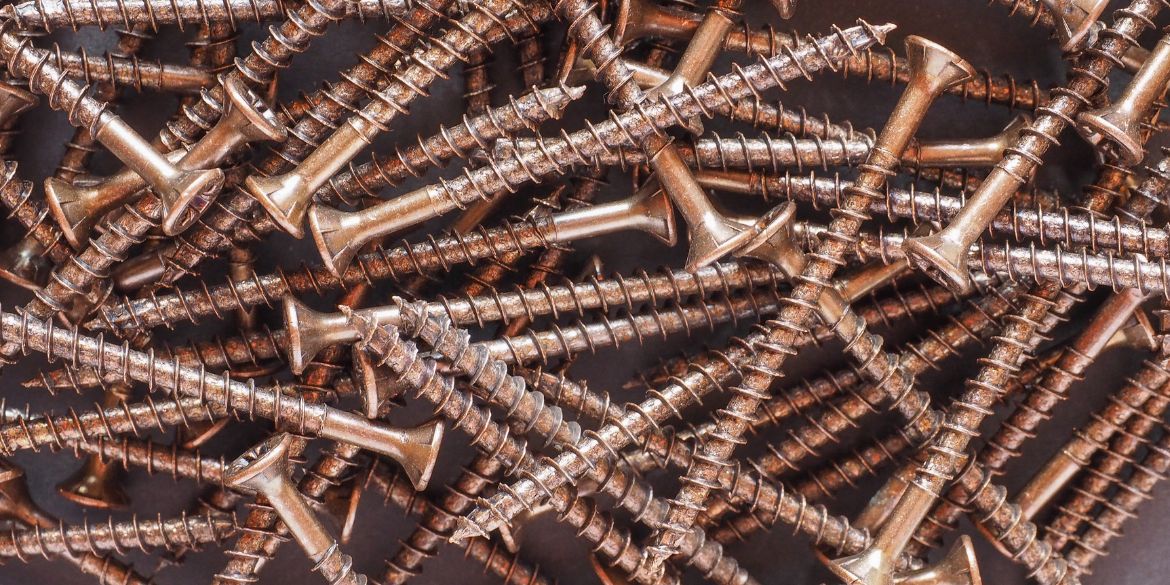
To withstand harsh outdoor weather, we manufacture deck screws with high-strength anti-corrosion coatings (like green epoxy or Dacromet) over carbon steel, or we make them directly from solid 304/316 stainless steel. Their unique bugle head ensures the screw sits perfectly flush with the wood surface without breaking the fibers. To prevent cam-out during high-torque installation, deck screws usually feature a Torx (Star) drive and include a self-drilling cutting edge (Type 17 point) at the tip. Construction crews frequently use them for outdoor boardwalks, patio decks, garden fences, and other projects involving pressure-treated lumber exposed to moisture.
Pocket Hole Screws
Pocket hole screws are purpose-built for pocket-hole joinery. We typically pair them with a pan or washer (flange) head, and overwhelmingly use a square (Robertson) drive to guarantee zero slippage. The flat underside of the head sits firmly against the flat bottom of the pocket hole, ensuring it never splits the wood like a wedge-shaped flat head would. Combined with a partially threaded design, it pulls two joining boards tightly together. This screw excels in cabinetry frame assembly, face-frame construction, and any scenario heavily relying on a pocket hole jig.
Structural Wood Screws
Serving as a modern, high-tech alternative to traditional lag screws, structural wood screws consist of high-strength heat-treated steel and feature a much slimmer profile. We usually equip them with flat or flange heads and Torx drives, along with built-in cutting points and friction-reducing knurled shoulders. Not only do they offer exceptional shear strength, but they also eliminate the need for pre-drilling in most cases, drastically speeding up construction. Engineering crews frequently use them to build load-bearing timber frames, construct log cabins, and quickly connect heavy wood beams.
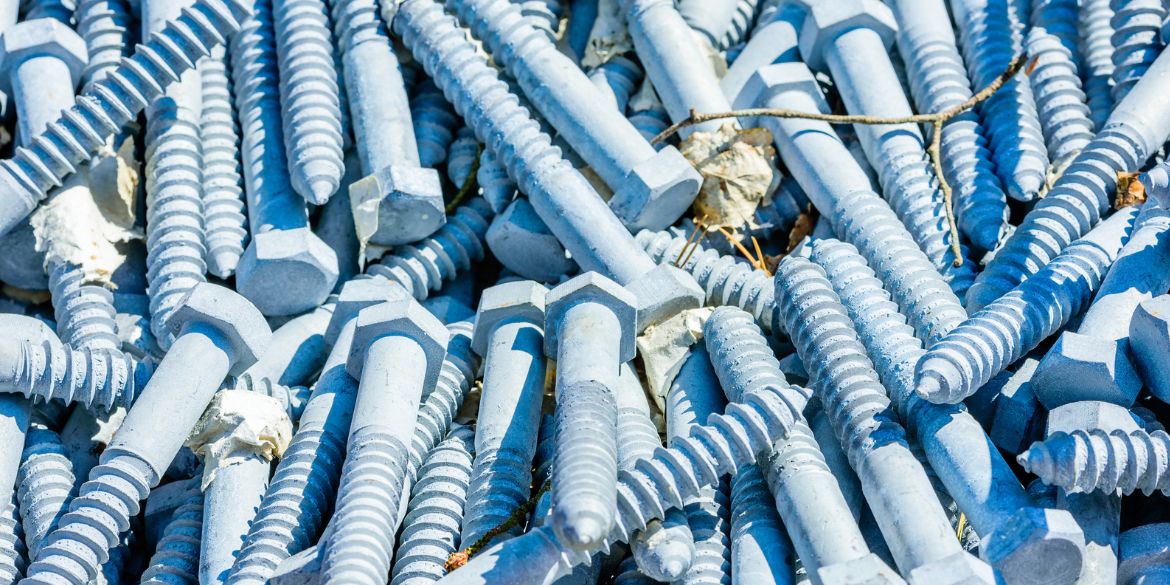
Designed to bear massive loads and extreme shear forces, lag screws feature massive dimensions and thick diameters. They have a classic hex head and incredibly deep threads. Workers must install them using a wrench or socket, which provides driving torque far exceeding what Phillips or Torx drives can handle. Lag screws remain an indispensable fastener for heavy timber construction, gazebo building, and anchoring thick lumber to posts or masonry walls.
MDF & Particle Board Screws
Medium-Density Fiberboard (MDF) and particle board have loose internal structures, so we specifically design these screws with deeper, sharper thread angles. These aggressive threads securely bite into the loose wood particles, completely preventing stripping. We usually incorporate small cutting nibs under the flat head, allowing the screw to automatically carve its own countersink during installation, effectively stopping board edges from swelling or cracking. Furniture factories use this screw extensively when assembling flat-pack furniture and manufacturing engineered-wood cabinetry.
Coarse Thread vs. Fine Thread
Depending on the wood density, we must categorize wood screws into coarse and fine threads. Coarse thread (Coarse Thread) screws feature deep, widely spaced threads that aggressively grab loose wood fibers to provide maximum holding power; woodworkers use them exclusively for softwoods (like pine and cedar) and plywood. Fine thread (Fine Thread) screws have shallower, tightly spaced threads that cut smoothly without violently forcing apart dense wood fibers. To prevent splitting expensive hardwoods like oak or walnut, you must choose fine thread specifications.
Conclusion
These represent the core wood screw types on the market. Selecting the precise fastener guarantees sturdy joints while effectively controlling material waste costs. If you need to purchase high-quality wood screws and various fasteners in bulk, visit our official product page. As a direct-source manufacturer, we provide comprehensive, competitively priced one-stop procurement solutions!
The biggest difference lies in their thread distribution. Wood screws have a smooth, unthreaded “shank” near the head, allowing the top board to slide freely. When the bottom threads bite into the lower board, the screw head tightly clamps the two pieces of wood together. Self-tapping screws feature a “fully threaded” design. If you use them to join wood, the threads lock into both boards simultaneously, pushing them apart and creating a gap you cannot close (known in the industry as the “jacking effect”). Therefore, we strongly advise against substituting self-tapping screws for wood screws in woodworking joints.
How do I choose the right wood screw length?
The standard industry rule of thumb is: The screw must be long enough to pass through the top board, and the portion penetrating the bottom board should equal at least twice the thickness of the top board. For example, to fasten a 1.5 cm thick board, you need to select a wood screw that is at least 4.5 cm long to ensure sufficient holding power and structural stability.
Which wood screw drive type is least likely to strip (cam-out)?
For woodworking projects requiring high torque (such as driving long screws or installing hardwoods), traditional Phillips drives easily cam-out and strip the screw head. Torx (Star) and Square (Robertson) drives currently offer the best anti-slip performance. They transfer power drill torque perfectly and even support one-handed operation, vastly improving construction efficiency.
Can I use regular zinc-plated wood screws on outdoor pressure-treated lumber?
Absolutely not. Outdoor pressure-treated lumber contains chemical preservatives (especially copper-based formulas). These chemicals rapidly corrode standard zinc-plated carbon steel screws, causing them to bleed yellow rust or even snap entirely. For outdoor woodworking projects, you must use deck screws treated with specialized anti-corrosion coatings, or opt directly for 304/316 stainless steel screws, which provide the ultimate corrosion resistance.



 Spanish
 English
 Arabic
 Russian
 Portuguese