
Outdoor exposure causes fasteners to rust over time. Beyond surface damage, rust seizes threads and leads to assembly failures. Knowing how to clean rusty tornillos, nueces, y pernos keeps equipment running smoothly. Here is a direct, practical guide to cleaning rusted screws, bolts, and nuts safely without damaging their threads.
1. Safety & Preparation
Before starting rust removal, personal protection and job-site assessment prevent injuries and secondary damage to components.
- Personal Protective Equipment (PPE):
- Wear a dust mask and safety glasses to keep abrasive metal dust and chemical vapors away from your airway and eyes.
- Wear chemical-resistant work gloves to prevent direct skin contact with rust removal solvents.
- Tool Selection:
- Use correct-fit box-end wrenches, sockets, and drive bits. Avoid worn or ill-fitting open-end wrenches to prevent rounding hex heads or stripping Phillips drives.
- Cleaning Approach (Disassembly vs. Clean-in-Place):
- Disassembly Cleaning: Best for maintenance shutdowns or offline parts. It allows full immersion and ultrasonic treatment with 360° coverage.
- Clean-in-Place (CIP): Used for pressurized lines, confined spaces, or active equipment. Focuses on exposed threads and nut faces; keep solvents from seeping into internal equipment clearances.
2. Methods to Clean Rusty Screws, Nuts, and Bolts
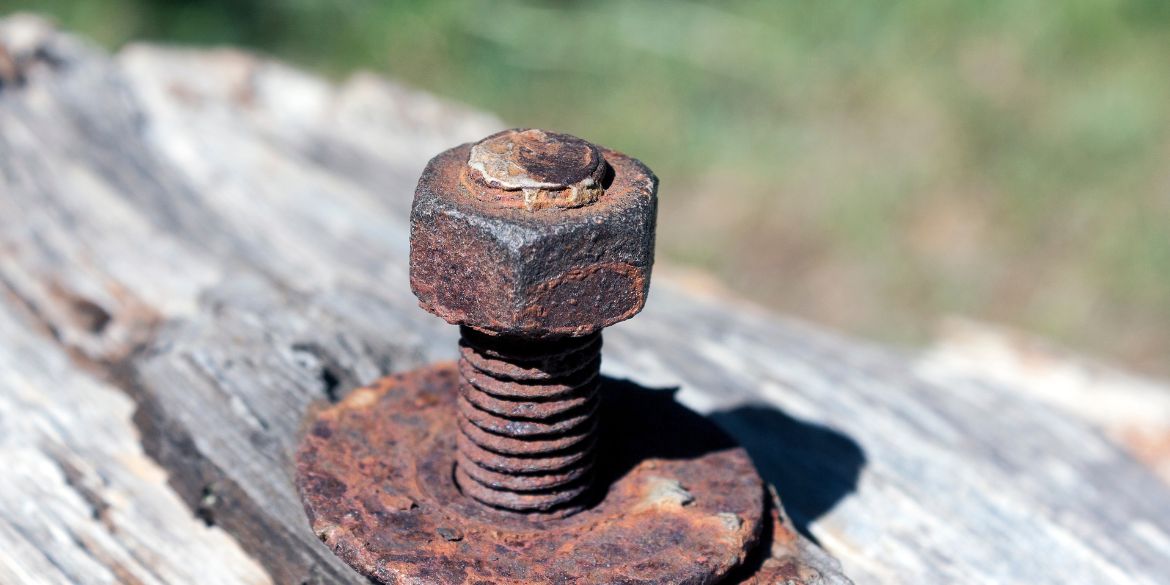
Select the appropriate cleaning method based on available workshop equipment and rust severity:
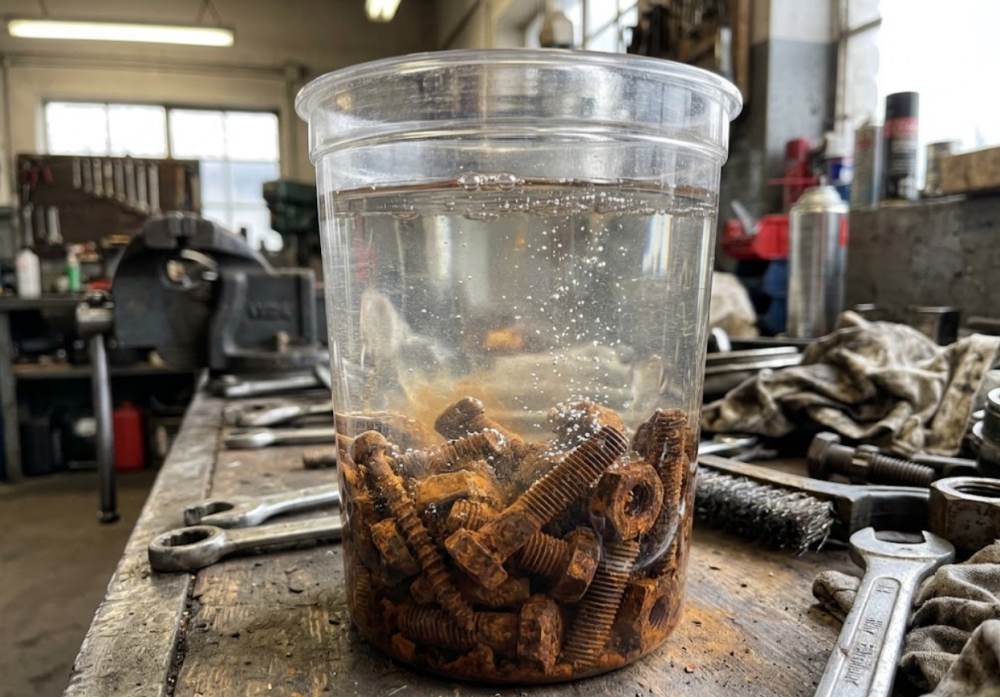
- Chemical Soaking
- Best For: Disassembled small-to-medium batches with uniform light-to-moderate surface rust.
- Procedure: Fully submerge parts in an industrial mild rust remover or a 5%–10% citric acid solution for several hours to soften and lift iron oxide.
- Preventing Flash Rust: After scrubbing off residues with clean water, immediately neutralize parts in a mild alkaline bath (such as a baking soda solution) and blow-dry quickly. Unprotected reactive metal develops flash rust within minutes of air exposure.
- Mechanical Brushing
- Best For: Heavy surface crust, thick scale, and assembled, exposed hardware.
- Procedure: Use a bench grinder or rotary tool fitted with a soft brass or steel wire wheel.
- Technique: Brush strictly along the thread helix angle. Never grind across the crests, which strips major diameters, flattens crests, and ruins pitch tolerances.
- Ultrasonic Cleaning
- Best For: Disassembled fasteners only, especially fine-pitch threads, socket head cap screws, and blind nuts.
- Procedure: Place disassembled hardware into an ultrasonic tank filled with an industrial cleaning and degreasing solution. High-frequency cavitation micro-jets strip packed rust and grime from deep thread roots that manual brushing cannot reach.
3. How to Remove Rust from Nuts and Bolts (Seized Threads)
When severe rust locks nuts and bolts together, do not force them with cheater bars—this usually shears the shank. Use these controlled steps to free seized threads:
- Penetrating Oil & Capillary Action:
- Clear loose dirt and scale with a wire brush, then apply penetrating oil generously along the mating seam.
- Dwell Time: Do not turn immediately. Allow 15 to 30 minutes for low-surface-tension fluid to draw into thread clearances via capillary action; reapply and wait several hours for stubborn seizures.
- Impact & Vibration:
- While the oil soaks, tap the flat sides of the tuerca hexagonal lightly with a brass hammer or punch.
- Mechanical shock cracks the brittle internal iron oxide matrix without deforming the fastener body.
- Controlled Thermal Expansion:
- If the nut remains frozen, heat the outer nut shell using a heat gun or induction heater. The differential thermal expansion frees the threads.
- Temperature Limit: Keep surface temperatures between 150°C and 200°C. Never torch bolts red-hot with open flames, as this anneals factory-quenched steel and destroys structural heat-treatment properties.
4. How to Clean Rusty Bolt Threads
Thread mating surfaces carry structural preload. Cleaning requires precision to protect thread profile and finish:
- Root & Groove Cleaning:
- Thread roots trap hard scale and rust. Scrub unidirectionally with a fine brass detail brush and solvent, then blow out packed debris using dry compressed air.
- Tolerance Protection:
- Never use abrasive cutoff wheels or angle grinders directly on thread flanks. Material removal cuts into major diameters and thins effective pitch thickness, preventing rated torque and causing thread stripping.
5. Post-Cleaning Care & Inspection
Cleaning is incomplete without proper surface stabilization and quality checks:
- Complete Drying: Immediately blow off all moisture from external threads, internal tapped holes, and blind cavities using dry compressed air.
- Anti-Seize & Passivation:
- Immediate Reassembly: Apply a thin, even coat of high-temperature anti-seize paste (copper- or nickel-based) across thread engagement zones to seal out moisture and eliminate galling.
- Storage: Dip parts in a light rust-preventative oil or seal them in VCI (Volatile Corrosion Inhibitor) packaging.
- Thread Fit Verification:
- Rust removal consumes base metal. Inspect cleaned threads using a standard Go/No-Go thread gauge or by hand-threading a brand-new mating nut. Discard fasteners showing binding, wobble, or loose backlash immediately.
Resumen
Regular rust removal restores thread engagement and extends service life, but cleaning remains a temporary fix. With 23 years of manufacturing expertise, T&Y provides high-grade carbon steel and 304/316 stainless steel pernos y tuercas engineered to withstand harsh corrosive environments. If base metal erosion compromises your fasteners, contact our engineering team for customized solutions and volume orders.



 Spanish
 English
 Arabic
 Russian
 Portuguese